See what a product has actually cost, not just what it costs today.
DealTrackerProBot records price history for every tracked Amazon and Flipkart product, so you can judge a price with real evidence instead of a guess.
Open Telegram Bot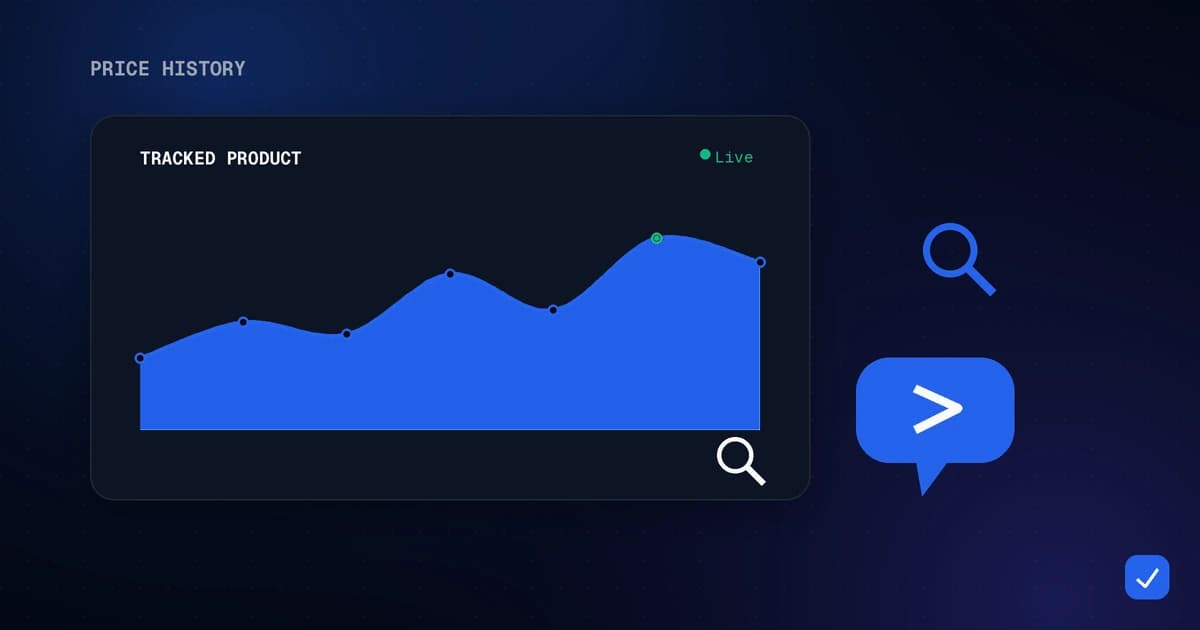
Introduction
A single price, seen once, tells you almost nothing. It could be the lowest a product has ever been, or it could be an unremarkable day wearing a discount badge. Price history is what turns that single number into something you can actually evaluate.
Instead of trusting whatever a listing shows in the moment, price history gives you a timeline — what a product cost last week, last month, and how today compares. That timeline is the foundation almost every other decision about buying online rests on.
This page explains what price history actually captures, why it matters more than most shoppers realize, and how to use it well when deciding whether today is genuinely the right time to buy.
The idea itself isn't complicated. What matters is having it available at the exact moment you're deciding whether to click 'buy,' which is precisely when most shoppers currently have no record to check at all.
That's the gap this feature closes — not by predicting the future, but by making the past visible exactly when it's most useful.
Why It Matters
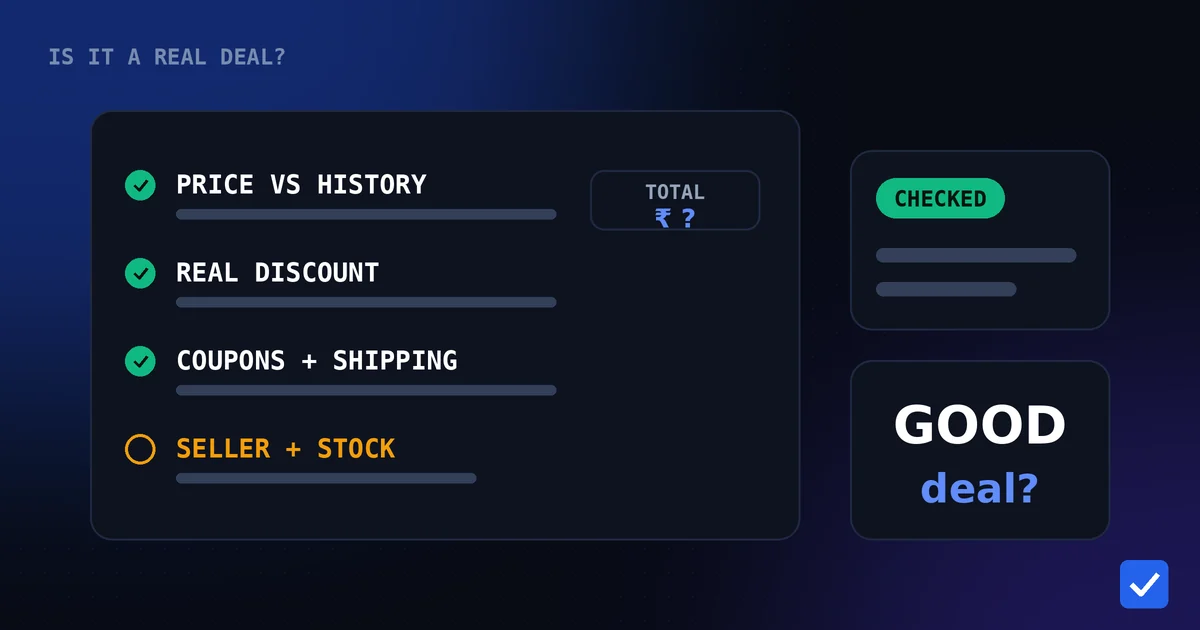
Retailers frequently show a percentage-off badge calculated against a reference price. Sometimes that reference is genuine — the product really did cost more recently. Other times, the reference price is inflated, or simply outdated, making the discount look larger than it is. Price history is the only reliable way to tell these two situations apart.
It matters especially around sale events, when banners and countdown timers are specifically designed to create urgency. A 'lowest price ever' claim is a factual statement that can be checked — and price history is what checks it, rather than asking you to take the claim on faith.
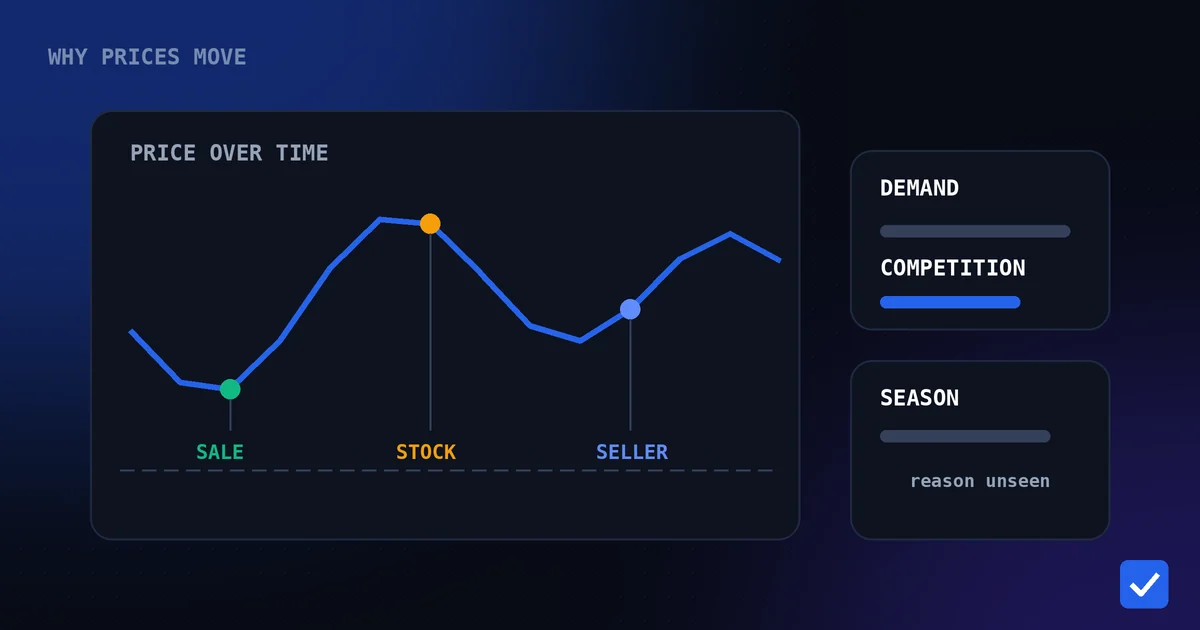
It also protects against a subtler pattern: prices that drift upward slightly in the days before a sale, so the eventual markdown looks more dramatic than it really is. This isn't necessarily anyone's deliberate scheme, but the effect on a shopper is the same regardless of intent.
Beyond single purchases, price history builds a sense of what's normal for a category over time — whether electronics dip before a new model launch, or whether appliances get cheaper outside of a particular season. That broader pattern is only visible with a real record spanning weeks or months.
History also matters when a product's price recovers after a temporary drop. Without a record, a shopper who missed the low point has no way of knowing it happened at all. With history, that context stays visible even after the moment has passed, which is useful for judging how the product tends to behave going forward.
How It Works
Price history starts the moment you begin tracking a product. Each time DealTrackerProBot checks a listing, the price it finds is recorded, building a timeline specific to that product from that point forward.
You don't need to do anything to generate this record beyond adding the product in the first place. It accumulates automatically in the background, alongside the price drop alerts and target price tracking already running for that same listing.
When you want to check it, the history is available directly in the same Telegram chat where you're tracking the product — there's no separate site or dashboard required to see how a price has moved.
The longer a product has been tracked, the more useful its history becomes. A few days shows very little. A few weeks or months starts to reveal an actual pattern worth acting on.
What you get
Real evidence, not a guess
Instead of trusting a discount badge, you can see exactly what a product has cost recently and decide for yourself whether today's price holds up.
Works for both Amazon and Flipkart
The same price history tracking applies whether the product you're watching is listed on Amazon or Flipkart.
Makes target prices meaningful
A target price based on real history is far more likely to reflect an actual good deal than one picked at random.
Exposes inflated discounts
A large percentage-off badge is easy to check against a real record, instead of being taken at face value.
Builds automatically
History accumulates on its own once tracking starts — there's no separate step required to generate it.
Available in the same chat
You don't need a separate app or website to check history; it's part of the same Telegram conversation you're already using.
Useful beyond a single purchase
Over time, history reveals broader patterns in how a category of product tends to move, not just one item's story.
Gives past drops lasting value
Even a temporary low point stays visible in the record, so it continues to inform decisions long after the moment itself has passed.
Where this helps most
Verifying a sale banner
Before trusting a 'lowest price ever' claim during a big sale event, checking history confirms whether it's actually true for that specific product.
Setting a realistic target price
History shows what a product has actually sold for, which is exactly what a sensible target price should be based on.
Comparing similar products
Looking at history across a few comparable listings can reveal which one has a genuinely better track record, not just a better price today.
Timing a big purchase
For expensive items, a few weeks of history can reveal whether prices tend to dip at a predictable point, worth waiting for.
Avoiding buyer's remorse
Checking history before buying reduces the chance of purchasing right before a price drops further.
Understanding seasonal patterns
Tracking a category over months shows whether certain products reliably get cheaper at a particular time of year.
Judging a brand-new listing
For a recently launched product, early history — even just a few weeks of it — is often the only real signal available before deciding whether to wait.
Manual checking vs. DealTrackerProBot
The same outcome, without the daily effort.
Common mistakes
Checking history only after deciding to buy
By that point, there's no time left to wait for a better price. Check history earlier, while you still have the option to hold off.
Assuming no history means no data available anywhere
History reflects what's been tracked since you started watching a product — it can't show data from before tracking began, which is exactly why starting early matters.
Treating a short window as the full picture
A few days of history is a start, not a complete record. Give tracking time to build something genuinely useful before drawing conclusions.
Ignoring history once a target price is set
History can reveal that a lower price than your original target is realistic. It's worth revisiting occasionally, not just checking once.
Comparing history across different sellers as if they were one price
On multi-seller listings, make sure the history you're looking at reflects the specific listing you actually care about.
Assuming every discount is fake because some are
Not every markdown is inflated — plenty are genuine. History is there to tell the difference, not to create blanket suspicion.
Discarding history after a purchase
Even after buying, keeping a product's history in mind helps you recognize what a fair price looks like the next time a similar item comes up.
Expecting history to predict the future perfectly
History describes what has happened, which is strong evidence for what's likely — but it's not a guarantee of what a price will do next.
Shopping tips
- Start tracking a product well before you plan to buy, so history has time to accumulate.
- Check history specifically before trusting any 'lowest price' or 'biggest discount' claim.
- Use history, not intuition, when deciding what target price to set.
- Revisit history periodically, even after setting a target, in case a better number becomes realistic.
- Look at history across a few similar products if you're deciding between options.
- Treat a short history window as a starting point, not a final verdict.
- Combine history with a price drop alert, so you're notified the moment the trend you've been watching actually shifts.
Track supported products from Amazon and Flipkart
This works across the stores DealTrackerProBot supports.
See all supported storesFrequently asked questions
Quick answers about price history.
Related articles

Start using price history today.
Open the bot, send a product link, and tracking starts immediately — free to use.
Open Telegram Bot