Check the same product on two days and the price may be different. Check it again next week and it may have changed again. It feels random, but there are usually ordinary commercial reasons behind it, even when the shop never tells you which one applies.
This article explains the common reasons. It also marks where we are describing general ecommerce behaviour, where things depend on the seller or product, and what a price tracker can and cannot see. Amazon and Flipkart do not publish how they set prices, so nothing here claims to describe either company's internal systems.
Key takeaway: prices move for many overlapping reasons, and you usually only see the result. Tracking shows how often and how far a price moves, which is more useful than guessing why.
Promotions and Sale Events
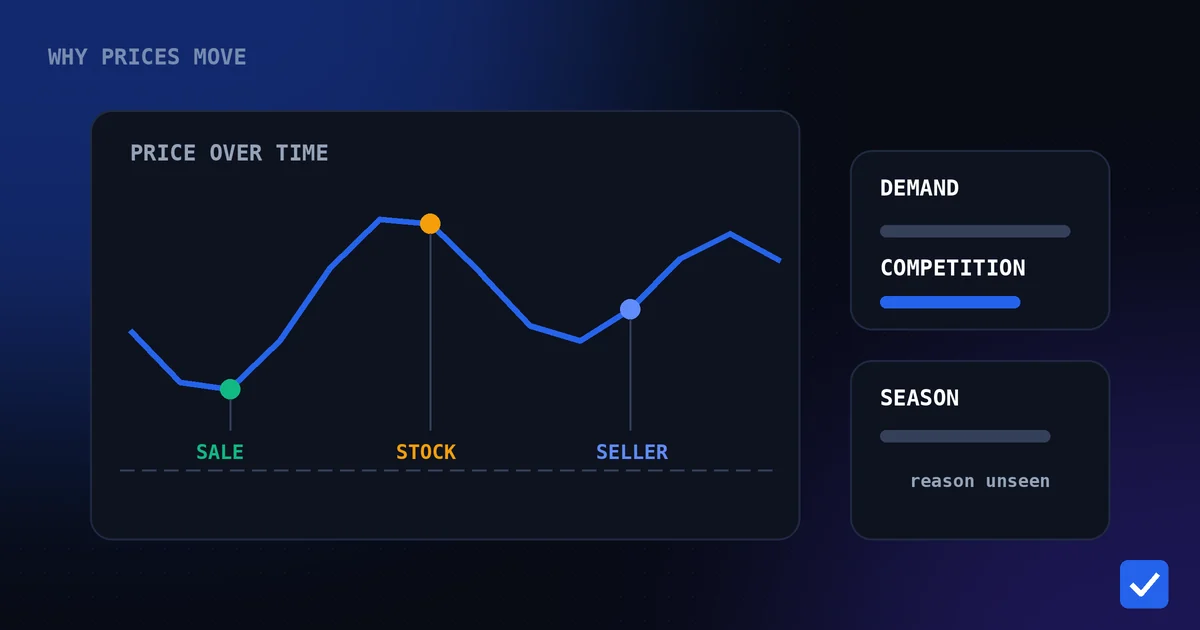
The most visible cause is deliberate discounting: a sale event, a festival campaign, a clearance or a short-lived deal. These tend to start and end on a schedule set by the store or the seller, so prices fall and then recover. The size of the discount and the products included differ from one event to the next, so last time's price is a hint rather than a promise.
Sellers and Listings
On a marketplace, many sellers can offer the same product, and each chooses their own price. When the seller shown on a listing changes, or a seller adjusts their price, the number you see can shift without anything else changing. Return terms, delivery time and warranty handling can differ between sellers too, so a lower price is not automatically the better offer.
Stock Levels and Demand
A seller with limited stock may price differently from one with plenty, and a product that is suddenly popular may be priced differently from one that is not selling. Sellers may also reduce prices to clear inventory. Whether any particular change is caused by this is usually not visible to you.
Competition
Sellers often watch each other. If a competing listing lowers its price, others may respond. This is general market behaviour, not a statement about any specific store, and it is one reason prices can move several times in a short period.
Seasons and Product Age
- Seasonal demand. Some products sell more at certain times of year, which can affect pricing.
- Product lifecycle. New products often launch at a higher price and tend to become cheaper as newer models arrive, though the pattern differs a lot by category.
- Costs. Changes in supply, currency or taxes can eventually affect shelf prices.
Coupons, Offers and Payment Discounts
Not every change shows up in the listed price. Coupons, checkout discounts and bank offers can change what you pay without changing the number on the page. See coupon vs price drop for how they compare.
What Is Known, What Varies, What a Tracker Can See
| Question | Honest answer |
|---|---|
| Do prices change often? | On many products, yes. How often differs widely by product and seller. |
| Is there a best day of the week to buy? | No universal rule is supported. See below. |
| Why did this price change? | Usually not visible. A tracker records that it changed, not why. |
| Will it go lower? | Cannot be known. Past ranges are a guide, not a forecast. |
What DealTrackerProBot can observe
For supported Amazon marketplaces and Flipkart, DealTrackerProBot automatically checks the products you track and records the price and stock status it finds. On Amazon it can also detect supported coupons, when detected. It can show you what changed and when, in the history it has recorded since you started tracking. It does not know the reason behind a change, it does not see a seller's costs or strategy, and it cannot predict future prices.
Because stock, prices and coupon behaviour may vary by marketplace and product, check the supported stores page for what each store covers.
Why There Is No Guaranteed Best Day to Buy
Advice such as "buy on a certain weekday" sounds neat but rests on patterns that differ across products and change over time. A more dependable approach is to look at the product's own history and decide what price you consider good. Amazon price history explained shows how to read that range, and how to set a target price turns it into a rule that does not depend on guessing a date.
What This Means in Practice
- Expect prices to move, and do not treat one price as permanent.
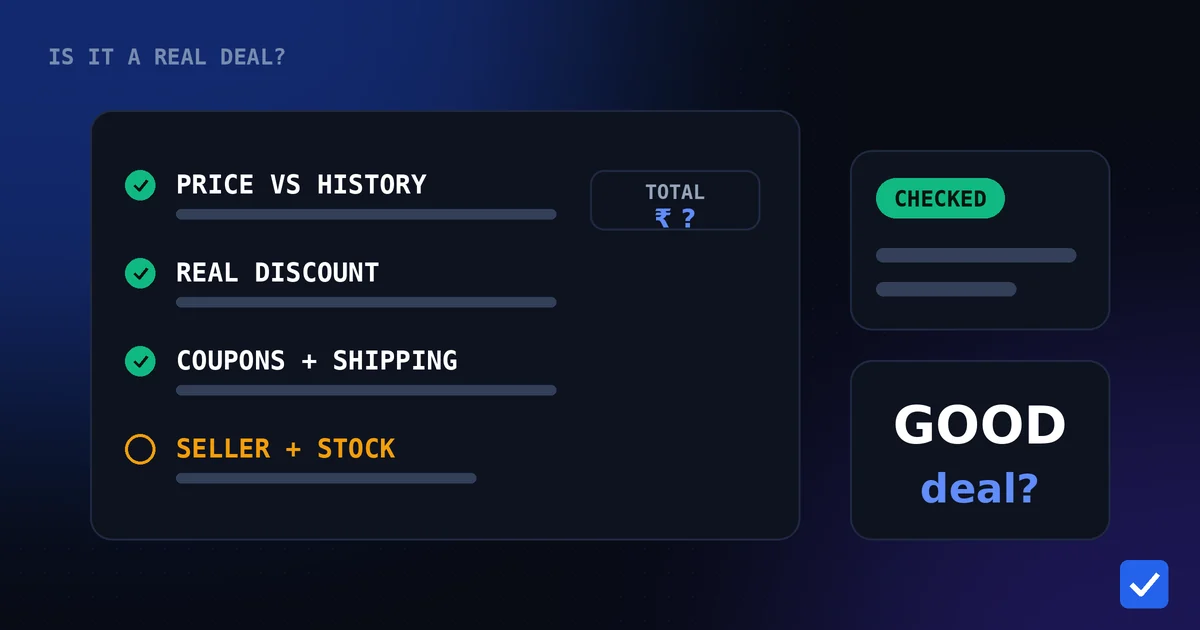
- Judge a price against that product's own history, not against a crossed-out number. See how to know if a deal is actually good.
- Set a number you would be happy to pay, and let an alert do the waiting.
- Check stock and seller before reacting to a low price.
Related pages: Price History Feature, Price-Drop Alerts, Amazon Price Tracker, Flipkart Price Tracker, Supported Stores